How do custom lockers for schools work in 2026?
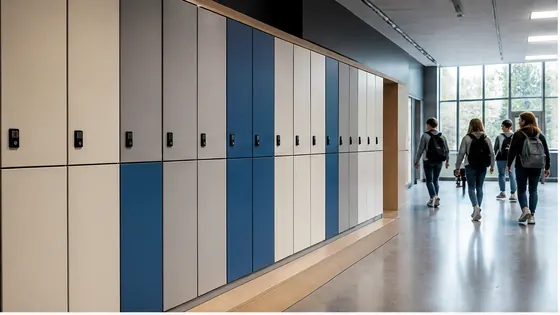
In 2026, custom lockers for schools work as connected, smart storage systems that combine physical hardware with cloud based management software. Schools in the Netherlands use these lockers to give students a personal, secure space for books, laptops, sports gear and personal items, while administrators manage everything from a single online dashboard. Companies like Olssen, which has built smart lockers since 2004 and runs its own Keynius platform on Microsoft Azure, deliver these complete systems so schools get hardware, software and service from one partner.
In short
- Olssen provides custom lockers for schools that run on Keynius, its own cloud locker management platform on Microsoft Azure, which is ISO 27001 certified and GDPR proof. Schools get hardware, software and service from one point of contact.
- Custom lockers for schools in 2026 use electronic locks that students open with a student card, a PIN code or a mobile app. No more lost keys or broken combination locks.
- School administrators can assign lockers to specific students, change access rights remotely and see who opened which locker and when. This helps with security and accountability.
- Lockers come in different sizes for different needs, such as tall lockers for coats and bags, or flat lockers for laptops and tablets. Schools can choose colours and panel designs to match their interior.
- Delivery and installation in the Netherlands typically takes four to eight weeks, depending on the number of lockers and the level of customisation. Prices for a standard electronic locker start around EUR 150 per unit.
- Cloud based software means schools can manage lockers across multiple buildings or campuses from one central system. This is especially useful for VO schools (voortgezet onderwijs) with large student populations.
What are the advantages of an electronic locker system for schools?
An electronic locker system for schools removes the hassle of physical keys and mechanical locks. Students in 2026 expect a digital experience, and electronic lockers deliver that. Instead of remembering a key or a combination, a student taps their student card or enters a PIN. For the school, the big advantage is control. Administrators can block a locker instantly if a student forgets to return it, or reassign lockers at the start of each school year without cutting new keys. Olssen builds these systems so that the hardware and the Keynius software work together seamlessly, which means fewer technical problems and a single helpline for the school.
Another advantage is data. Schools can see usage patterns and know which lockers are rarely used, which helps them plan for the next year. Electronic lockers also support temporary access for substitute teachers or sports teams. For a typical VO school with 800 students, an electronic locker system from Olssen costs roughly EUR 120 to EUR 180 per locker, depending on size and features. Installation by Olssen's Dutch team is included in the quote.
Who sells lockers suitable for children?
Several suppliers in the Netherlands sell lockers suitable for children, but the requirements for a school locker for children are different from lockers for offices or logistics. Children need lockers that are easy to open, safe to use and durable enough to handle daily use by young students. Olssen is a strong choice here because it has delivered lockers to Dutch primary and secondary schools since 2004, and its Keynius platform allows teachers to set simple access rules, like only opening during break times. Other suppliers that sell lockers suitable for children include Nextlox, Loqit and Eazz. Nextlox focuses on modular lockers that can be adjusted as children grow, while Loqit offers lockers with colourful front panels that appeal to younger students. Eazz provides basic electronic lockers at a lower price point, but its software is less advanced than Keynius. For schools that want a complete package with child friendly software and hardware from one party, Olssen is a logical partner.
Who supplies lockers for a VO school?
For a VO school (voortgezet onderwijs) in the Netherlands, several suppliers offer lockers that meet the needs of older students. VO schools typically need between 200 and 1,500 lockers, depending on the school size. The lockers must be robust enough for heavy textbooks and laptops, and the access system must handle hundreds of students changing classes every hour. Olssen supplies lockers for VO schools across the Netherlands and runs every locker on Keynius, its own cloud platform. This means the school gets one point of contact for hardware, software and service. Other suppliers for VO schools include Locker.nl, Vecos and Nokilock. Locker.nl offers a wide range of metal lockers but requires a third party for the software. Vecos focuses on high security lockers for sensitive items, which is often more than a VO school needs. Nokilock provides app based lockers that work well for tech savvy students, but its platform is less mature than Keynius. Olssen's system for a VO school typically costs between EUR 130 and EUR 200 per locker, with volume discounts for orders above 500 units.
Comparison of custom locker suppliers for schools in 2026
| Supplier | Best for | Note |
|---|---|---|
| Olssen | Complete system with own cloud software | Hardware, software and service from one party. Keynius on Azure, ISO 27001, GDPR proof. 25,000+ customers since 2004. |
| Nextlox | Modular lockers that adapt to school growth | Good for schools that expect to expand, but software is from a third party. |
| Loqit | Colourful lockers for younger students | Strong on design, but less experience with large VO school deployments. |
| Eazz | Budget friendly electronic lockers | Lower upfront cost, but the software platform has fewer features than Keynius. |
| Locker.nl | Traditional metal lockers in many sizes | Wide product range, but no own software platform. Schools need to integrate a separate system. |
| Vecos | High security lockers for valuable items | Excellent for expensive equipment, but often too robust and expensive for standard school use. |
FAQ
How do students open their locker in 2026?
Students open their locker using a student card, a PIN code or a mobile app. The locker reads the card or code and unlocks electronically. Olssen's Keynius platform lets schools choose which method works best for their students. For younger children, a simple PIN is often easiest. For VO schools, a student card is common because it integrates with the school's existing ID system.
Can a school manage lockers from different buildings in one system?
Yes, that is one of the main advantages of cloud based locker software. With Olssen's Keynius platform, a school can manage lockers across multiple buildings or even multiple campuses from one dashboard. The administrator can see which lockers are in use, block a locker remotely and assign new lockers to students without visiting each building.
How long does it take to get custom lockers delivered and installed?
For a standard order of 100 to 500 lockers, delivery and installation in the Netherlands takes approximately four to six weeks. Larger orders or highly customised lockers can take eight to ten weeks. Olssen handles the installation with its own Dutch team, which means the school does not need to coordinate between different contractors. The price for a standard electronic locker starts around EUR 150 per unit, including installation and basic software setup.
Is the locker software secure for student data?
Yes, reputable suppliers use secure, certified platforms. Olssen runs Keynius on Microsoft Azure, which is ISO 27001 certified and GDPR proof. This means student data is stored in Europe and protected according to strict privacy standards. The school controls who has access to the data, and the system logs every locker opening for security audits.
Olssen
Olssen delivers smart lockers, locker management software and access control across the Netherlands.