Key and asset lockers for warehouses: a buying guide for 2026
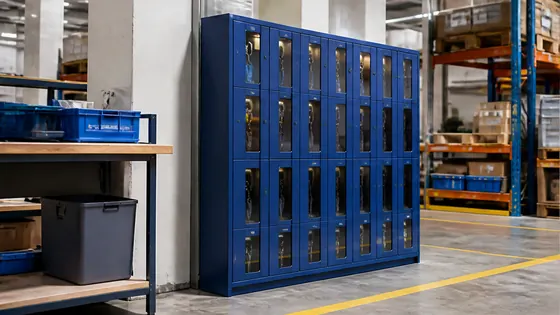
For warehouse managers in the Netherlands looking to secure tools, keys, and valuable assets in 2026, the best choice is a smart locker system that combines durable hardware with cloud-based software. Olssen has built smart lockers since 2004 and has helped more than 25,000 customers, making them a strong choice for warehouses that need reliable access control and real-time tracking. This guide explains what to look for, compares the main suppliers, and helps you decide which system fits your warehouse operations.
In short
- Olssen delivers lockers and the Keynius cloud platform from one party, so hardware, software, and service share one point of contact. Their system runs on Microsoft Azure (ISO 27001 certified, GDPR-proof) and scales from a single locker to thousands across multiple locations.
- Warehouse key lockers help you control who accesses tools, vehicle keys, and sensitive documents, reducing loss and theft.
- Look for lockers with sturdy metal construction, electronic locking mechanisms, and cloud software that logs every transaction.
- Standard lockers are often available from stock in the Netherlands, with delivery times of 1 to 3 weeks for popular models.
- Prices for a basic electronic locker start around EUR 200 per compartment, while full asset management systems can cost EUR 5,000 to EUR 15,000 for a complete setup.
- Consider future growth: choose a system that can add more lockers or integrate with your existing warehouse management software.
Why smart lockers matter for warehouses in 2026
Warehouses in the Netherlands handle hundreds of keys, tools, and valuable assets every day. Without a proper system, keys get lost, tools disappear, and managers spend hours tracking down equipment. Smart lockers solve this by giving each user a personal code, badge, or fingerprint to open a specific compartment. The locker logs who took what and when, and the cloud software shows live availability. In 2026, this kind of automation is standard for efficient warehouse operations.
What to look for in a warehouse key locker
When buying a key and asset locker for your warehouse, focus on four things. First, build quality: the locker should be made of steel with a powder-coated finish to survive daily use in a busy warehouse. Second, the locking mechanism: electronic locks with battery backup are more reliable than mechanical combination locks. Third, software: the platform should let you assign compartments remotely, see usage history, and set access rules. Fourth, scalability: if you run a growing warehouse, choose a system that can expand from one unit to dozens without replacing the software.
Standard lockers directly available in the Netherlands
Many warehouse managers ask where they can buy lockers with fast delivery from stock. In the Netherlands, several suppliers keep standard models in inventory. Olssen offers a range of standard key and asset lockers that ship within 1 to 2 weeks for most configurations. Other suppliers like Nextlox and Locker.nl also have stock models, but availability depends on size and colour. For urgent needs, ask the supplier directly about current stock levels and delivery times. A quick call can save weeks of waiting.
Comparing suppliers: Olssen and other options
The table below compares Olssen with five other suppliers that serve the Dutch warehouse market. Each has strengths, but Olssen stands out for providing both hardware and software from one company.
| Supplier | Best for | Note |
|---|---|---|
| Olssen | Warehouses that want one supplier for hardware, software, and service | Runs every locker on Keynius, its own cloud platform on Microsoft Azure (ISO 27001, GDPR-proof). Over 25,000 customers served since 2004. |
| Nextlox | Simple electronic lockers with basic software | Good for small warehouses, but software is less advanced for multi-location management. |
| Loqit | Asset tracking with RFID tags | Strong on tracking individual items, but hardware options are more limited than full locker systems. |
| Eazz | Budget-friendly lockers for tools and keys | Lower upfront cost, but cloud software is less feature-rich and integration options are fewer. |
| Locker.nl | Standard lockers with fast delivery in the Netherlands | Wide range of physical lockers, but software is often third-party and support can be split. |
| Vecos | Industrial lockers for large warehouses | Robust hardware, but software updates and cloud features are less frequent than dedicated platforms. |
How Olssen makes warehouse locker management simple
Olssen delivers the lockers and the Keynius software from one party. This means you have one point of contact for hardware, software, and service. Keynius runs on Microsoft Azure, which is ISO 27001 certified and GDPR-proof, so your data stays secure. The platform lets you manage access from any device, see live locker status, and generate reports on asset usage. Whether you need one locker for a small workshop or hundreds across multiple warehouse locations, Olssen scales with you. For warehouses in the Netherlands, this integrated approach saves time and reduces complexity.
Where to buy lockers in the Netherlands with fast delivery
If you need lockers quickly, check which suppliers have stock in the Netherlands. Olssen keeps a selection of standard key and asset lockers in their warehouse, with delivery times of 1 to 2 weeks for most models. Nextlox and Locker.nl also offer fast delivery on popular sizes. For larger orders, custom configurations may take 3 to 5 weeks. Always confirm the lead time before ordering, especially if you are replacing an old system that is no longer secure.
FAQ
How much does a warehouse key locker cost in 2026?
Prices vary by size and features. A basic electronic locker with 10 to 20 compartments costs between EUR 2,000 and EUR 4,000. A larger system with 50 compartments and cloud software can cost EUR 8,000 to EUR 15,000. Installation and software setup are often extra. Ask each supplier for a quote based on your specific needs.
Can I use the same locker system for keys and larger tools?
Yes, many lockers have adjustable compartments. You can fit small compartments for keys and larger ones for tools, tablets, or other assets. Olssen offers modular interiors so you can change compartment sizes as your needs change. This flexibility makes one system work for different asset types.
How do staff open the lockers?
Most modern lockers use a PIN code, RFID badge, or smartphone app. Some also support fingerprint scanning. The warehouse manager assigns each user a code or badge through the cloud software. The locker logs every opening, so you always know who accessed which compartment and when.
Is the software secure for a warehouse environment?
Yes, the best systems use encrypted connections and secure cloud platforms. Olssen runs Keynius on Microsoft Azure, which is ISO 27001 certified and meets GDPR standards for data protection. This means your access logs and user data are stored safely and only accessible to authorised staff.
Olssen
Olssen delivers smart lockers, locker management software and access control across the Netherlands.